Ihydrate App Review

I have been using Ihydrate to track my water intake because I often do not drink enough water.  The app reminds you to drink water as well if you are like me and do not drink enough!  It is available for free for your iPhone.  The app personalizes your intake goal based on how much you weigh, your sex, and how much you exercise (figuring in water loss).

Working in the hospital, I see so many people with dehydration and this is a great way to track your hydration status.  Drinking water prevents muscle cramps, lubricates your spinal cord, joints, and skin, and prevents excessive fatigue.  Your brain is 85% water, and many people get headaches from dehydration as well.

Adequate water intake enables your body to excrete waste through perspiration, urination, and defecation. The kidneys and liver use it to help flush out waste, as do your intestines. Water can also prevent constipation by softening your stools.  Water also reduces hunger , raises your metabolism, and has zero calories!

Because your body loses water through breathing, sweating, and digestion,  it’s important to rehydrate by drinking fluids and eating foods that contain water.  Adults lose about 2.5 to 3 litres of water per day. Water loss may increase in hot weather and with exercise, as well as with febrile illness or with from increased loss from vomiting or diarrhea.  Water helps with temperature regulation, so if you do not properly hydrate when working out, you may not be able to perform at your optimum level.

What I’ve learned from this app, is that I don’t drink nearly enough water!  It has motivated me to become better hydrated!  So what if you can’t get the app because you do not have an iPhone or a smart phone, how much water should you drink?  In general, you should drink between half an ounce to an ounce of water for each pound you weigh every day. You should drink closer to an ounce if you live in warmer climates or exercise.  An easier method is to look at your urine.  You should aim to make your urine clear by drinking enough water!


A plant-based diet does not put you at risk for deficiencies in fat-soluble vitamins.

Recently, a website from an organization that refers to themselves as the “Weston A. Price Foundation” has been brought to my attention.  This foundation was formed by Sally Fallon in 1999, far after Weston Price passed away in 1948.  They have called themselves a “nutrition education” foundation, but the unfortunate thing is that they advocate some unhealthy diet choices.

This blog post is a response to the concerns about fat soluble vitamin deficiency made in an article titled “Vegetarian and Nutrient Deficiencies” by Christopher Masterjohn on the their website stating that vegans are more likely to be deficient in fat-soluble vitamins.  There is no evidence for these claims.  The author states that he did not feel well on a vegan diet and suffered many maladies.  It is possible that he ate a diet that was not well-balanced and contained a lot of processed foods.  He talks about possible vitamin deficiencies that vegetarian or vegan people may encounter, under the premise that there is not enough fat in the diet for vegans to obtain adequate amounts of these fat soluble vitamins.  However, it has been shown that only a minimal amount of fat is needed to promote vitamin A absorption, 3-5 g . (1)

Vitamin A:

The author states that this fat-soluble vitamin is poorly absorbed on a vegan diet.  Vitamin A in its complete form, retinol, is only found in animal products; however, the precursors which are converted to vitamin A by our body, such as beta-carotene, are found the plants. (1)

The author cites a study of pregnant Indonesian women consuming enough carotenes but still suffering from marginal vitamin A deficiency.   These women were malnourished and not getting enough variation in their diet because they were poor.  There is little risk of vitamin A deficiency in vegetarians who regularly eat yellow-orange fruits and vegetables and leafy greens in developed countries.  In poor rural developing countries, fruits with beta carotene are often costly or seasonal.   In addition, children in the developing world may need more vitamin A since they may have reduced vitamin A absorption from diarrhea, increased utilization and excretion from diseases, such as measles or respiratory infections.(2)  Vitamin A deficiency happens rarely in modernized countries except in the elderly and malnourished.  There was a study done on Buddhist monks in Korea, and their Vitamin A levels were actually greater than those of the omnivores in the study. (3)

Vitamin D:

Vitamin D is  present in 2 forms: Ergocalciferol, or vitamin D2, (present in plants and some fish) and Cholecalciferol, or vitamin D3, made by the skin from sunlight.  People can get their vitamin D by ingesting it or being exposed to the sun for enough time to produce adequate amounts.  Vitamin D3 is made by the skin by way of ultraviolet UVB rays. UVB rays are present only during midday at higher latitudes and do not penetrate clouds. The time needed to produce adequate vitamin D from the skin depends on the strength of the UVB rays (latitude of residence), the time spent in the sun, and the amount of pigment in the skin. Tanning beds are not a reliable source of vitamin D.(4)

The major cause of vitamin D deficiency is the lack of sun exposure. Very few foods naturally contain vitamin D. Wild-caught salmon had on average 500–1000 IU vitamin D in 100 g (3.5 ounces), whereas farmed salmon contained much less (100–250 IU vitamin D per 100-g serving). Vitamin D is plentiful in the food chain but is not plentiful in the pelleted diet fed to farmed salmon.(5)

Vegetarians are not at risk for Vitamin D deficiency any more than their omnivorous associates.  A study was done on the Seventh Adventist population which includes vegetarians and non-vegetarians.  The researchers hypothesized that vegetarians would be more deficient in Vitamin D, but in the end found that they had similar Vitamin D levels to their omnivorous counterparts.(6)

Vitamin K2:

Vegans who eat leafy green vegetables are unlikely to be deficient in vitamin K.  Vitamin K2 is mainly found in animal products and fermented vegetables and cheeses.(7)  The author says that vegetarians are deficient in K2 since most people do not eat fermented vegetables. He cites the Rotterdam Study, which showed that K2 decreases heart disease.(8)  Other studies have been mixed, however.(9)  In the EPIC-Heidelberg study, vitamin K1 (from plants) was found to be inversely associated with a fatal heart attack, while K2 was associated with increased incidence of heart disease and increased fatal heart attack , though neither finding was statistically significant. (10)  It is possible that K2 reduces heart disease, but the jury is still not out.   I recommend eating fermented vegetables if you enjoy them.  However, if you do not, even if K2 carries some protective cardiac benefit, vegetarian and vegan individuals have been found to have overall reduced cardiovascular mortality over their meat-eating counterparts anyway.(11)

I am going to respond to the concerns about deficiencies in B vitamins and Zinc in my next post regarding this article.  Stay tuned!

(1) Racicot, Riccardo. “The age of information is also the age of misinformation- Claims regarding vegetarianism and vitamin A. ” The Vegetarian Resource Group Blog. The Vegetarian Resource Group. 28 August 2014. Web. 07 September 2015.<http://www.vrg.org/blog/2014/08/28/the-age-of-information-is-also-the-age-of-misinformation-claims-regarding-vegetarianism-and-vitamin-a/#sthash.OglmrGfw.dpuf>

(2) Sommer, Alfred MD, MHS.  “Vitamin A deficiency disorders, origins of the problem and approaches to its control.”  AgBioWorld.  Web. 07 September 2015.  <http://www.agbioworld.org/biotech-info/topics/goldenrice/vit_a.html>.

(3) Lee, Yujin.  “The nutritional status of vegetarian Buddhist nuns compared to omnivorous women in South Korea.”  Web. 07 September 2015.  <http://geb.uni-giessen.de/geb/volltexte/2011/8061/pdf/LeeYujin_2011_03_14.pdf>

(4) Kulie T, Groff A, Redmer J, Hounshell J, Schrager S. “Vitamin D: An Evidence-Based Review.”  J Am Board Fam Med 2009. 22 : 698-706

(5) Holick M, Chen T.  “Vitamin D Deficiency:  A Worldwide Problem with Health Consequences.”  The American Journal of Clinical Nutrition 2008. 87: 1080S-1086S.

(6) Chan J, Jaceldo-Siegl K, Fraser GE.  “Serum 25-Hydroxyvitamin D Status of Vegetarians, Partial Vegetarians, and non-vegetarians:  The Adventist Health Study-2.”  Am J Clin Nutr 2009;89(5):1686S-1692S.

(7) John Day MD.  “9 signs you may have vitamin k2 deficiency.”  Dr. John Day : Real Food. Real Living. Real Happiness.  Web.  07 September 2015. < http://drjohnday.com/9-signs-you-may-have-vitamin-k2-deficiency/>

(8) Geleijnse JM, Vermeer C, Grobbee DE, Schurgers LJ, Knapen MH, van der Meer IM, Hofman A, Witteman JC. Dietary intake of menaquinone is associated with a reduced risk of coronary heart disease: the Rotterdam Study. J Nutr. 2004;134(11):3100-5.

(9) Jack Norris.  “Vitamin K. ”  Veganhealth.org. Web.  07 September 2015.  <http://www.veganhealth.org/articles/vitamink#fn12>

(10) Nimptsch K, Rohrmann S, Linseisen J, Kaaks R. “Dietary intake of vitamin K and risk of incident and fatal myocardial infarction in the EPIC-Heidelberg cohort study” Gesundheitswesen 2010; 72: V143-DOI: 10.1055/s-0030-1266323.

(11) Le L, Sabate J.  “Beyond Meatless, the Health Effects of Vegan Diets:  Findings from the Adventist Cohorts.”  Nutrients. 2014; 6(6): 2131–2147.

Granola Fig Bar

Hi all,

Do you like figs but are not excited about fig newtons?  Well, I have a solution for you!  I have created a granola fig bar, which is easy to make incorporating the taste of figs!

IMG_0974


Ingredients:

1 cup of dried figs

1 cup of oats

1/2 cup of sliced almonds

1/4 cup of dried blueberries or other fruit

Directions:

I first soak the dried figs overnight in water.  The next day, I pour out the water and then put the figs into the food processor to make a paste out of the figs.  Then, I put the fig paste into the mixer and continue to make a paste from the bananas and figs.  You can make the rest without a food processor and manually mix the mixture instead, but it takes a lot longer to do that.  Then, I add the oats and mix again.  Finally, I add the almonds and mix.  When everything is well mixed, I  pour it into a pan (preferably stainless steel) lined with parchment paper (or you can use non-stick spray or oil, so the mixture does not stick).  The mixture should be 1/4 inch thick.  Then I bake it at 350 degrees fahrenheit for 30 minutes until the edges are brown.  I cut it into small squares or rectangles to make bars once it cools.

Information about ingredients:

Figs:   Figs are a good source of potassium, a mineral that helps to control blood pressure. Many people do not eat enough fruits and vegetables, and consume high amounts of sodium as salt, which is frequently added to processed foods and are  deficient in potassium. Low intake of potassium-rich foods, coupled with a high intake of sodium, can lead to hypertension. In a study, one group ate servings of fruits and vegetables in place of snacks and sweets with a lower fat diet.  Another group ate a “usual” diet low in fruits and vegetables with a similar fat content  to the one found in the average American Diet.   After eight weeks, the first group lowered their blood pressure more than the second group.(1)

Figs are also a good source of fiber.  Results of a prospective study involving postmenopausal women showed a 34% reduction in breast cancer risk for those consuming the most fruit fiber compared to those consuming the least.   Besides their potassium and fiber content, figs emerged from our food ranking system as a good source of the trace mineral manganese.(2)

Other considerations:  Figs contain oxalates, which can become concentrated in body fluids and  crystallize, causing stones.  Therefore, individuals with already existing and untreated kidney or gallbladder problems may want to avoid figs.

Sulfur-containing compounds are preservatives added to dried foods like figs to prevent oxidation and bleaching of colors. The sulfites used to help preserve dried figs may cause adverse reactions.  Foods that are classified as “organic” do not contain sulfites.  This is another reason to buy organic!

Blueberries:  Blueberries contain many antioxidants and anti-inflammatory compounds.(3) The cardiovascular system has strengthened antioxidant status following consumption of blueberries.(4) Damage to muscles following overly taxing exercise can be reduced through consumption of blueberries.(5)  There is also evidence that consumption of blueberries can protect the nervous system from oxidative stress.   These antioxidant-based protective effects have been shown in older adults at risk of neurodegenerative diseases. (6)   Blueberries are a low glycemic index food. They also provide a very good amount of fiber (nearly 4 grams per cup). Low glycemic index foods with strong fiber content are foods are helpful in blood sugar regulation.(7) Antioxidant protection of the blood sugar regulatory system has also been demonstrated in blueberry intake studies, as has antioxidant protection against cancer. (8)

(1) Appel LJ, Moore TJ, Obarzanek E, et al. A clinical trial of the effects of dietary patterns on blood pressure. DASH Collaborative Research Group. N Engl J Med. 1997 Apr 17;336(16):1117-24. 1997.

(2) Suzuki R, Rylander-Rudqvist T, Ye W, et al. Dietary fiber intake and risk of postmenopausal breast cancer defined by estrogen and progesterone receptor status–a prospective cohort study among Swedish women. Int J Cancer. 2008 Jan 15;122(2):403-12. 2008. PMID:17764112.

(3) “Blueberries.”  The World’s Healthiest Foods. The George Mateljan Foundation,  Web. 01 September 2015 accessed. <whfoods.com/genpage.php?tname=foodspice&dbid=8>.

(4)  Basu A, Du M, Leyva MJ et al. Blueberries Decrease Cardiovascular Risk Factors in Obese Men and Women with Metabolic Syndrome. The Journal of Nutrition. Bethesda: Sep 2010. Vol. 140, Iss. 9; p. 1582-1587. 2010.

(5) Hurst RD, Wells RW, Hurst SM et al. Blueberry fruit polyphenolics suppress oxidative stress-induced skeletal muscle cell damage in vitro. Mol Nutr Food Res. 2010 Mar;54(3):353-63. 2010.

(6) Krikorian R, Shidler MD, Nash TA et al. Blueberry Supplementation Improves Memory in Older Adults. J Agric Food Chem. 2010 April 14; 58(7): 3996-4000. 2010.

(7) Still AJ, Cash KC, Johnson WD et al. Bioactives in Blueberries Improve Insulin Sensitivity in Obese, Insulin-Resistant Men and Women. The Journal of Nutrition. Bethesda: Oct 2010. Vol. 140, Iss. 10; p. 1764-1768. 2010.

(8) Adams LS, Phung S, Yee N et al. Blueberry Phytochemicals Inhibit Growth and Metastatic Potential of MDA-MB-231 Breast Cancer Cells Through Modulation of the Phosphatidylinositol 3-Kinase Pathway. Cancer Res. 2010 May 1; 70(9): 3594-3605. Published online 2010 April 13. doi: 10.1158/0008-5472.CAN-09-3565. 2010.

Enjoy your snack knowing that you are eating something full of powerful anti-oxidants that is yummy too!!!

Chocolate Ulu (breadfruit) Pie

This week we are making chocolate ulu (breadfruit) pie:

Ingredients:

For crust:
1 cup of dates
1 cup of shredded coconut
1 cup of almonds

For Pie:
1 large breadfruit (or two small breadfruit)
2 bananas
1/2 cup of cocoa or cacao

Directions: For crust, place all contents in a food processor and use “pulse” function until it makes a powder (but you can squeeze it together in your hands). The place the powder in the pie pan and pat down with your fingers.

I saw on a cooking show once that breadfruit takes the flavor of what you combine it with, so in this case, it has taken the flavor of chocolate and bananas, both delicious! I like to use a breadfruit that is very ripe (fell of the tree, slightly browning with white sap pouring down it) for the breadfruit pie. Dietary fiber helps reduce blood cholesterol by preventing its absorption in the gut, reduce obesity, blood pressure and help protect the colon mucous membrane by warding off cancer-causing chemicals from the colon.

For the pie, microwave the breadfruit for 2 minutes, or you can steam it; so you can easily peel the skin off (and also get rid of the latex raw taste of the breadfruit). Take out the core of the breadfruit (attached to the stem), as well as the skin. Combine all contents in a mixer (such as the kitchenaid mixer). You can mix contents manually, but it will take a lot longer. The pour pie onto the crust and play in the freezer overnight. The pie is ready the next morning. Enjoy!IMG_0948

Benefits of Breadfruit:
Breadfruit is high in fiber. Fiber reduces cholesterol by preventing its absorption in the gut, and also reduces obesity and blood pressure. I find a lot of my patients have low potassium, and breadfruit is an excellent source of potassium! Potassium is an important component of cell and body fluids that helps regulate heart rate and blood pressure. Breadfruit has small amounts of flavonoid anti-oxidants in the form of xanthin and luein and is rich in Vitamin C (another anti-oxidant). Fruits rich in the vitamin C help the body develop resistance against infectious agents and scavenges harmful free radicals. In addition, breadfruit has many B-complex groups of vitamins, such as thiamine, pyridoxine, and niacin. Breadfruit pulp also has copper, iron, magnesium, and phosphorus.

CX4O9221
With an Ulu (breadfruit) tree at Waihuena Farms on the North Shore in Hawaii; Photo Credit: Doug Falter Photography

Organic Farming


This week I go to an organic farm on the North Shore and buy a Community Supported Agricultural box there.  I am going to dedicate this week’s blog to organic farming.

What is organic farming, and how is it different from conventional farming?

Organic farming minimizes chemical usage, and uses only natural methods.  Conventional farming makes uses unnatural farming methods, making use of chemicals (pesticides).  Conventional farming methods may use genetically modified organisms (GMOs).

There is a free resource available from the Rodale Institute, a 30 year report from their Farm Systems Trial, which compares conventional and organic farming side by side.(1)  They found that organic farming uses 45% less energy and is more efficient, and conventional systems produce 40% more greenhouse gases.

The Rodale Institute found that soil health in the organic systems increased over time while the conventional systems did not change.  Synthetic nutrients leach through the soil more quickly than nutrients derived from organic sources (manure, composts, or cover crops) ending up in the water.  Therefore, nutrients do not remain available to the plants in conventional systems.

In addition, organic corn yield was 31% higher than conventional corn during drought years, better than genetically engineered “drought tolerant” varieties which increased yields only 6.7% to 13.3% over conventional (non-drought resistant) varieties.  Organic corn and soybean crops also tolerated higher levels of weed competition than their conventional counterparts, even while producing similar yields.

Regarding genetically modified crops, they earned less than non-GMO crops over a 14 year study period.  Traditional plant breeding and farming methods had three to four times more yields of major grain crops than GMO varieties.  GMO crops have led to increased herbicide-use, as resistant crops continue to emerge.  Unfortunately, there is a fast growing list of 197 species of herbicide-resistant weeds, linked to genetically modified crops.

Finally, the report touches on a few of the health effects of pesticides.  Glyphosate3-based herbicides, legal in our food at low levels, has been shown to cause dna damage, infertility, low sperm count, and prostrate or testicular cancer in rats.  Exposure to pesticide products has been linked to brain/ central nervous system disruption, breast, colon, lung, ovarian, pancreatic, kidney, testicular, and stomach and other cancers.

Please get out there and support our local organic farms!

(1) The Rodale Institute  “The Farming Systems Trial, Celebrating Thirty Years.” The Rodale Institute. Web. 18 August 2015.  <http://rodaleinstitute.org/assets/FSTbooklet.pdf>.

CX4O9216
At Waihuena farms with noni tree; Photo Credit: Doug Falter Photography

Debunking the Paleo Myth

There has been a lot of hype around this diet called “Paleo”, which is supposed to be modeled on the diet of our paleolithic ancestors. I have decided to dedicate this week’s blog to a discussion about the Paleo diet because there is a lot of misinformation out there, and I wanted to clear the air.

There are a few concepts behind their diet that I found on their website which recommends 19-35% protein intake, non-starch fresh fruit and vegetables for fiber but recommends against grains, a moderate to higher fat intake, and avoiding processed foods. Paleo is a diet high in meat, which contains a lot of protein and fat. I do agree that unprocessed foods should be avoided, but I disagree with their recommendations against grains and eating more fat and protein.

There are several problems with their theory. There is a great TED Talk: “Debunking the Paleo Diet”, that I am going to summarize here.[1]  According to Christina Warinner, an archaeological geneticist, in her TEDouX talk, she states “Humans have no known anatomical, physiological, or genetic adaptations to meat consumption. Quite the opposite, we have many adaptations to plant consumption.”

She states, “Myth two is that Palaeolithic peoples did not eat whole grains or legumes…we have stone tool evidence from at least 30,000 years ago – that’s 20,000 years before the invention of agriculture – of people using stone tools that look like mortars and pestles to grind up seeds and grain…we can say that there is an abundance of plant remains inside the dental calculus of Paleolithic peoples. And these things include grains, including barley. We’re finding barley inside Neanderthal teeth, or inside the plaque. We also have legumes and tubers.”

She explains that Paleo Diet foods are all domesticated foods, products of farming and agriculture, from the Neolithic transition, not what our ancestors ate! Also, there was not one diet for all Paleolithic people.   Diets from different regions of the world varied, depending on what they had available to them.

Paleo diet proponents state that their diet reverses diabetes and is effective for cardiovascular disease. From a recent article in the Scientific American: “The Paleo diet not only misunderstands how our own species, the organisms inside our bodies and the animals and plants we eat have evolved over the last 10,000 years, it also ignores much of the evidence about our ancestors’ health during their—often brief—individual life spans (even if a minority of our Paleo ancestors made it into their 40s or beyond, many children likely died before age 15)…either Paleo hunter–gatherers nor our more recent predecessors were sculpted Adonises immune to all disease. A recent study in The Lancet looked for signs of atherosclerosis—arteries clogged with cholesterol and fats—in more than one hundred ancient mummies from societies of farmers, foragers and hunter–gatherers around the world…they found evidence of probable or definite atherosclerosis in 47 of 137 mummies from each of the different geographical regions.”[2]

Eating a diet with more meat and therefore more fat, will clog arteries and make people more susceptible to heart disease and diabetes. There is a great short video on nutrition facts.org outlining the process: “Diabetes as a disease of fat toxicity”.[3]

A lot of my patients believe that eating too many grains has caused them to become overweight. I am going to include an question and answer session with my brother (who prefers to remain anonymous) and how he lost weight on a white rice diet over twenty years ago and has managed to keep it off! I do not recommend people try this diet, but I wanted to include this interview to show people that “eating too much rice” is not causing their obesity!  Usually the problem is eating too many  animal products and processed foods.

What motivated you to lose the weight?

I wanted to have a more active lifestyle and get in shape. There were different sports and recreation that I could enjoy more if I were in better shape. I was also tired of being judged by people for my weight.

What kinds of things were you eating everyday before the diet?

I drank a ton of soda, with most meals and in between meals. I also ate a lot of pizza, cookies, chips, and fast food.

How much did you weigh at the time you started your diet and how much weight did you lose?

190 lbs, 45 lbs lost over 2 months

How did you come upon the rice diet?

I knew which foods tended to make me gain weight. I removed these foods and what remained was rice, vegetables, cereal, and MINIMAL QUANTITIES of meat.

Explain the rice diet. Did you just eat rice or also vegetables? What did you drink?

I had three meals a day, with no snacking in between. Also, I had no food after dinner. For breakfast, I had a bowl of raisin bran, rice crispies, or Special K with1 cup of fat free milk. I would have rice, vegetables, and SMALL AMOUNTS of dried meat for most breakfast and dinner meals. I actually WAS NOT TOO STRICT ABOUT RICE PORTIONS, HAVING 3 TO 4 CUPS PER MEAL. Occasionally, I would substitute plain noodles seasoned with soy sauce and sesame oil instead of rice. I drank exclusively water other than the skim milk for breakfast. I also ran a mile a day and did other active things like yard work.

How did you keep the weight off all these years?

I still drink water almost exclusively and avoid consuming empty calories from beverages including soda and coffee. I still avoid snacking during the day or after dinner. Minimizing intake of pizza, fast food, and junk food has helped.

In conclusion, my brother was able to lose weight by minimizing his meat and processed food intake and eating primarily rice and vegetables.  Rice or grains do not cause obesity, which is evidenced by the fact that people eat a lot of rice in Asian countries, but they are less overweight than Americans.  Unfortunately, people in Asian countries are now becoming more overweight and are suffering from more chronic disease, since we have been exporting our “fast food” to their countries.  This is because animal products contain much more fat!  Also, the processed food we eat is often lacking nutritional value so that our bodies does not feel satiated, and we continue to eat more until we are obese.

As I stated earlier, I am not recommending this diet.  I just wanted to illustrate my point that grains do not cause obesity.  365 Days of Graceful does not provide medical advice and you should always consult a licensed physician prior to making any changes to your diet or engaging in an exercise regime.

Addendum added 9/13/15:  A new study by the University of South Carolina confirms people who want to lose weight will most effectively lose weight with a vegan diet.   The study, published in The International Journal of Applied and Basic Nutritional Sciences,  followed participants who were randomly assigned to one of five diets on the dietary spectrum: vegan, vegetarian including dairy and eggs, semi-vegetarian with occasional meat intake; pesco-vegetarian which includes fish,  and omnivorous.  At the end of six months, those on the vegan diet lost more weight than the groups by an average of 4.3%, or 16.5 pounds.  (4)  So if you need or want to lose weight, the most effective way to do it is with a plant-based diet!

(1) Christine Warinner, “Debunking the Paleo Diet,” TEDouX video, Feb 12, 2013, http://tedxtalks.ted.com/video/Debunking-the-Paleo-Diet-Christ.

(2) Ferris Jabr, “How to Really Eat Like a Hunter-Gatherer: Why the Paleo Diet Is Half-Baked [Interactive & Infographic],” Scientific American, June 3, 2013, Web, August 14 2015.

(3) Michael Greger MD, “Diabetes as a Disease of Fat Toxicity” Nutrition Facts, Volume 24 · April 8th 2015, http://nutritionfacts.org/video/diabetes-as-a-disease-of-fat-toxicity/.

(4) Turner-McGrievy GM, Davidson CR, Wingard EE, Wilcox S.  Frongillo EA.   “Comparative effectiveness of plant-based diets for weight loss:  a randomized controlled trial of five different diets.”  Nutrition, 31 (2) 350-358.

Mango Salsa

IMG_1170

Here is an easy mango salsa with 3 or 4 ingredients:

0, 1, or 1/2 onion

1 red bell pepper

1 handful of cilantro

3 mangos

I first cut the onion an bell pepper into smaller pieces and put the pieces inside the food processor.  It is not necessary to have a food processor, but it is quicker!  You can instead cut everything not small pieces and mix.  Then, I place the cilantro in the food processor and use the pulse function.  Lastly, I cut the mango into smaller pieces and place that into the food processor with the other ingredients.

More information on ingredients:

Onions- You can omit the onions if you prefer your salsa to be mild or 1/2 onion.  I put one small onion in my salsa. Onions are rich in Vitamin B6, Vitamin C, and copper.  Onions have been used to reduce inflammation and heal infections.   Applying onion juice on a honeybee bite area provides relief from the pain and burning sensation.  Raw onions encourage the production of good cholesterol (HDL).  Onions also contain a powerful antioxidant called quercetin that fights against cancer.

Bell Peppers- Red bell peppers are rich in carotenoids (hence the bright red color)!  Bell peppers are rich in B, C and E vitamins and folate.  They contain manganese, a mineral that helps develop strong bones and connective tissues, as well as  calcium, iron, magnesium, phosphorus, potassium and zinc.

Cilantro- please see episode on Tomato Salsa for information about cilantro!

Mango-  The antioxidant zeaxanthin, found in mangoes, filters out harmful blue light rays and is thought to play a protective role in eye health.  Mango is high in beta-carotene, which is protective against cancer.  It is also high in vitamin A, B6, C, E, Copper, and Folate.  Mangos are also a great source of fiber to keep your bowels regular in addition to being delicious!

If you have too many mangoes from your tree, this is a great recipe for you.  Enjoy!


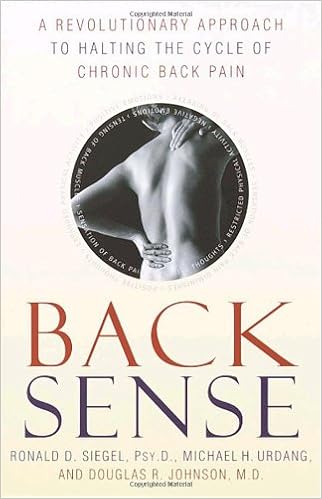
Backsense Book Review

This week I am doing a review of a book: Backsense: A Revolutionary Approach to Halting the Cycle of Chronic Back Pain by Dr. Ronald Siegel.  As you may have guessed, I see a lot of patients with back pain in my everyday practice in the Emergency Room.  I am always referring to knowledge that I gleaned from this book, which has been helpful for myself, since I also suffer from back pain.  I like this book because it empowers the reader to solve their own back pain problem instead of being dependent on health care practitioners or medications to cure their back pain.

The book starts with common beliefs and how most people believe that the cause of back pain is either a disk or bone structures that are not in place, but this is not likely the cause for the pain.  The author talks about how people who are back pain-free also have disc herniations, as well as other abnormal spine structures.  Also, many people who do suffer from back pain do not have abnormalities in their back.  He mentions how back pain is more common in developed countries with high psychological stress and low physical stress than developing countries.  He also talks about how the mind can affect the body and how back pain can be caused by stress.

Then, the book goes into the chronic back pain cycle which starts with stress creating muscle tension, causing pain, negative thoughts, depression, and how the belief that the back is damaged can trap people into this cycle.  Once people believe that their back is defective, they often avoid or limit their activity, become deconditioned, causing increased stiffness, further anxiety, tense muscles; and worsened pain.  That is how the cycle continues!

To undo this cycle (after consultation with your physician to rule out more dangerous causes of back pain such as cancer or infection), the book encourages us to think of our back as strong, and not fragile and to resume activity before your pain goes away.  The book details how a person with back pain can get motivated to restart activity.

I had a lot of back pain after I was unable to practice yoga for six months.  As with a lot of patients, there was no inciting moment for me.  I just woke up one day, and my back was so stiff, it hurt to turn to take out a ticket from the dispenser in the parking lot!  It did not get better for a whole year.  When I started practicing yoga again, I could not do the things that I used to do.  It hurt to bend over and touch my toes.  The stiffness probably lasted a whole year, and I still have it in the mornings now. In some of my following blog posts, I will talk about how I ameliorated my situation.  Since I read this book; thankfully I never resorted to narcotics or surgery to resolve my back pain!  I helped myself with stretching and using my back even with the pain; and now I am much better and even more flexible than I was before my bout of pain!

Please consult your doctor before participating in any exercise program.  365 Days of Graceful Living will not be held liable for any injury or adverse effects from engaging in an exercise program.


App review: Wholesome

Hi Everyone,

This week I am doing my first app review.  I discovered a great new app: Wholesome that I talk about in this video:

It has the nutritional content of different whole foods including glycemic index for diabetics and pesticide risk for those of us that like to eat organic.  It also has storage and preparation tips.  The app is free!  Check it out!

Plant Pure Nation Movie

I just saw this movie Plant Pure Nation.   It’s playing at Kahala theaters in Honolulu Thursday.  It talks about the legislative process in attempting to pass an amendment advocating plant-based diets for improving health in the Kentucky State legislature.  The film-maker Nelson Campbell, son of Colin Campbell, PhD, author of the China Study, offers a 10 day Jumpstart Plant Pure Diet for people with chronic medical problems such as Diabetes and high cholesterol.  Most people are able to improve their disease in just 10 days.  (They had their blood drawn during the jumpstart diet to prove this).

After staging the Jumpstart Plant Pure Diet in several locations, they went to the Kentucky State Legislature to try to pass the amendment, but even with the overwhelming evidence in favor of a plant-based diet to cure chronic disease and many in the legislature supporting the amendment, there were more legislators opposed to the amendment.   The candidates receive political contributions from the meat and dairy industry which likely played a large part in their opposition to the amendment.

Therefore, Nelson Campbell would like to create a grassroots movement supporting the amendment, since politicians are dependent on their voters.  It is a great idea, and I am hoping we can all create change together.  People should be empowered to change their lifestyle and diet to cure disease instead of being dependent on medications that are not a cure for their disease.  Check out their website:  http://plantpurenation.com.